


Adhere to GDPR and CPRA regulations: know where your data subjects are with automatic geoclassification



Compliance starts with knowing which regulations apply - and that depends on location
GDPR, CPRA, UK GDPR - privacy regulations are defined by where your data subjects live, not where your servers are. Typically, figuring out which datasets fall under which jurisdiction meant working outside of your software tools with manual tracking, spreadsheets, and guesswork. That's compliance risk waiting to happen.
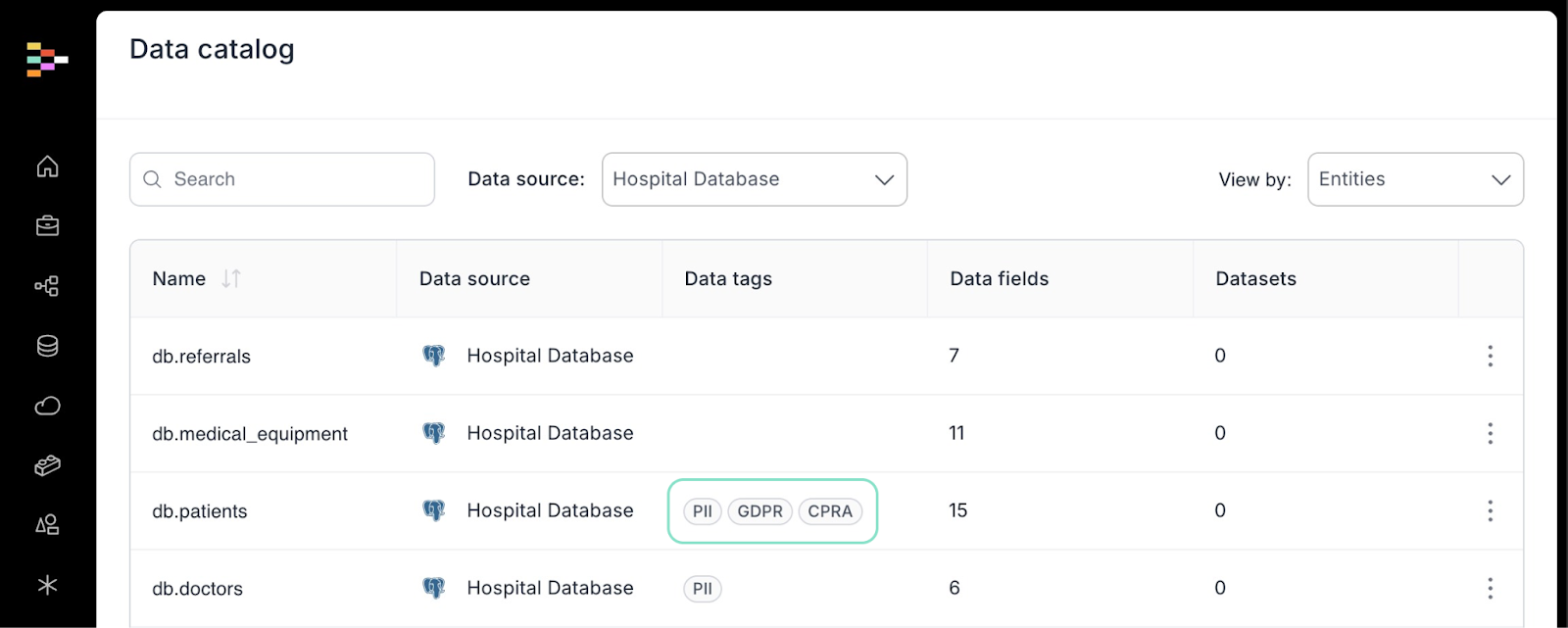
With the introduction of Geoclassification in Intellistack Streamline, your data is automatically analyzed and tagged based on the geographic location of individuals in your records. No manual classification. No missed jurisdictions. Just clear, actionable regulatory intelligence built into your Data Catalog.
From addresses and coordinates to regulatory clarity
Geoclassification reads the location data already in your systems - addresses, coordinates, phone numbers with country codes - and automatically determines which regulatory frameworks apply.
Here's what that looks like in practice:
- A customer record with a Berlin address? Tagged for GDPR/EU compliance.
- A student file with a Los Angeles zip code? Flagged for CPRA/California requirements.
- An employee record with UK coordinates? Identified as subject to UK GDPR.
This happens automatically across your connected data sources, with results visible directly in your Data Catalog. No manual review required.
How it works
Geoclassification combines intelligent detection with proven geographic data to deliver accurate, jurisdiction-specific tagging.
1. Location field detection
The system identifies location-indicating fields in your data - physical addresses, and geographic coordinates (latitude/longitude). It's smart enough to recognize when address components are split across multiple columns and groups them together for accurate processing.
2. Standardization and parsing
Raw location data comes in many formats. "CA" might mean California or Canada. "123 Main St, SF 94102" needs to be parsed into its components. Geoclassification normalizes all of this, handling abbreviations, typos, and incomplete data to produce consistent country and state/province classifications.
3. Jurisdictional mapping
Once locations are standardized, the system maps them to the regulatory frameworks that apply: GDPR for EU member states, CPRA for California, UK GDPR for the United Kingdom, and more. These tags appear automatically in your Data Catalog, giving you immediate visibility into your compliance landscape.
4. Confidence scoring
Not all location data is created equal. Geoclassification assigns confidence levels based on data quality and completeness and whether there is any ambiguity in the naming (like the aforementioned CA), so you know which classifications are rock-solid and which might need a closer look.
Why this matters for your organization
Reduce manual compliance effort
Stop maintaining spreadsheets to track which datasets contain European customers or California residents. Geoclassification does this automatically on initial data connection, and then updates on a daily basis, ensuring accuracy as your data changes.
Stay ahead of evolving regulations
Privacy laws continue to expand globally. Geoclassification's architecture is designed to support new jurisdictions as they emerge, keeping your compliance posture current without major overhauls.
Built for organizations with complex compliance needs
Geoclassification delivers the most value where regulatory complexity is highest. Here's how it helps:
- Healthcare organizations managing patient data across multiple states and countries can finally stop manually tracking which databases contain EU patients vs. California residents. Instead of maintaining spreadsheets to determine where HIPAA intersects with GDPR or state privacy laws, Geoclassification automatically surfaces this overlap - reducing hours of compliance documentation to a quick Data Catalog check.
- Higher education institutions with international student populations face the challenge of applying both FERPA and GDPR to the right records. Geoclassification automatically identifies which student record datasets fall under EU jurisdiction, eliminating the guesswork when responding to data subject access requests or audits.
- Multinational corporations processing employee and customer data across regions can build jurisdiction-aware workflows directly from their Data Catalog. When Geoclassification tags a dataset as containing California residents, your team knows immediately that CPRA deletion timelines apply - no cross-referencing required.
- SaaS companies serving global customers need to prove compliance to prospects and auditors alike. Geoclassification provides a clear, always-current map of which regulations apply to which data - making audit prep faster and sales conversations about data handling more confident.
If your data spans jurisdictions, Geoclassification gives you the visibility to act on compliance requirements, not just be aware of them.
A few things to know
Geoclassification works with data that contains explicit location information - addresses, coordinates, or phone numbers with country codes. It cannot classify records that only contain names, emails, or other non-geographic identifiers.
Classification accuracy depends on source data quality. Well-formatted addresses produce high-confidence results; incomplete or ambiguous data may require additional review. The system is designed to favor precision over recall, minimizing false positives that could create compliance confusion.
Get started today
Geoclassification is available now to Intellistack Streamline customers. Connect your data sources, run classification, and see your jurisdictional landscape mapped automatically in your Data Catalog.
Ready to take the guesswork out of regulatory compliance? View this help article to learn more about Geoclassification or reach out to your customer success manager.